





As a pedestrian in Baltimore, Maryland, you don’t have an airbag or seatbelt to protect you in an accident. The injuries you’re likely to suffer can be catastrophic and change the course of your life in a moment. While you watch medical bills add up and struggle from a sudden loss of income, the at-fault driver’s insurance company is working to pin the collision on you. In Maryland, the fight over liability can end a claim before it even has a chance to start.
The good news is that juries tend to be sympathetic when a person on foot is hit by a vehicle. The hard part is keeping the insurance company from taking that advantage away. If you’ve been hit by a car in Baltimore, you need an experienced legal advocate in your corner.
WGK Personal Injury Lawyers has represented injured pedestrians across Baltimore for nearly 50 years. Backed by nearly 100 years of combined attorney experience, we’ve recovered over $100 million in damages for our clients. Those results include numerous six- and seven-figure settlements.1
Past results do not guarantee future outcomes. Every case is different. These figures represent aggregated data from cases handled by our firm and are provided for informational purposes only.
Call (410) 837-2144 for a free consultation with our experienced Baltimore pedestrian accident lawyers today. We’re available to take your call 24/7/365.
Table of Contents
Why Injured Pedestrians in Baltimore Choose WGK Personal Injury Lawyers
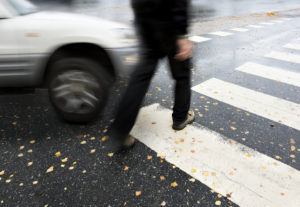
Experience matters when you’re navigating a pedestrian accident claim in Baltimore, MD. You don’t need a personal injury lawyer with some experience handling a lot of different types of cases. You deserve to work with a law firm whose attorneys have decades of combined hands-on experience representing people who’ve been seriously injured or who’ve lost family members in Baltimore car accidents.
At WGK Personal Injury Lawyers, our scope of legal representation focuses heavily on traffic accidents, including a large percentage of pedestrian injury claims.
Here’s what we actually do for an injured pedestrian when they ask for our help, and why it matters for what your case is worth:
Our pedestrian work is built around three jobs:
Acting Fast to Preserve Critical Evidence
First, we move fast on evidence before it disappears. In fact, the first two weeks of a claim are heavily focused on finding, securing, and preserving evidence.
Our team:
- Sends preservation letters to nearby businesses and government camera operators
- Deploys private investigators to canvas for footage along busy stretches like Pratt Street
- Pulls traffic-signal sequencing
- Request body-worn-camera footage from the responding officers
- Photographs the scene at the same time of day under the same lighting, and
- Talks to witnesses while their memories are fresh.
Pratt Street is densely cameraed and well-lit near the Inner Harbor and the University of Maryland, which undercuts a defense argument that you were in dark clothing or hard for the driver to see.2
This is marketing material and is not legal advice. Every case is unique and laws change frequently. Please contact our office to speak with an attorney about your specific situation before making any legal decisions.
Disputing Claims of Contributory Negligence
Second, we know Maryland case law that defeats the contributory negligence defense most carriers lean on.
Maryland follows pure contributory negligence: a plaintiff who is even one percent at fault for a collision is generally barred from any recovery.3 But under Maryland case law (Myers v. Bright), being negligent isn’t enough to be contributorily negligent. The plaintiff’s negligence has to have caused the collision.
Crossing outside a crosswalk or wearing dark clothing is mere evidence of negligence, not automatic contributory negligence.4
Asserting the Last Clear Chance Defense When Supported by the Facts
Third, we find every layer of insurance, including layers that have nothing to do with the driver who hit you.
Even when a pedestrian was crossing against a signal or outside a crosswalk, the case can still be won if the driver had the last clear chance to see and stop their vehicle before causing an accident.
The further a pedestrian had already crossed when struck, the stronger that argument becomes. We build it from the physical evidence: where the impact happened, how many lanes the client had already cleared, the driver’s line of sight, and whether the driver was trying to beat a light.5
Injured, Hon? We can help.
Free consultation. You pay nothing unless we win.
When to Call a Pedestrian Accident Lawyer in Baltimore, MD
It’s important to contact an experienced pedestrian accident lawyer as soon as you can after you get hurt.
Here’s why:
The at-fault driver’s insurance company will start calling within hours. Anything you say can be used against you. Insurance terms of art around left turns, merging lanes, crosswalk position, and right of way get lifted from a friendly-sounding conversation and turned into a contributory negligence argument later. Once those statements are on record, they are hard to untangle.
Carriers generally start discounting case value when initial treatment is delayed. Putting off care gives the insurance company the opportunity to question the extent of your injuries and their relationship to your pedestrian accident. Delaying care beyond 3 to 5 days can hurt your claim’s value, and a gap of more than 10 to 14 days can put the viability of the claim itself at risk.6
Filing and notice deadlines approach rapidly, especially if a government agency is involved. The standard statute of limitations for pedestrian accident lawsuits is three years. If your case involves a city, county, or state vehicle, the notice deadline runs well inside the 3-year statute of limitations.7 Claims against the City of Baltimore, Baltimore County, and the State of Maryland are subject to accelerated one-year notice deadlines. Wait too long and you lose the right to sue, no matter how strong the underlying case is.
If you already have an attorney in the mix early on, you’ll be protected against the insurance company’s tactics, have assistance obtaining necessary and timely medical care, and ensure that your claim complies with strict filing and notice requirements.
Common Causes of Pedestrian Crashes in Baltimore
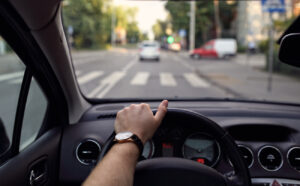
Pedestrian crashes are not random. The same conditions show up over and over in fatal and serious injury cases.
Darkness and Low Visibility
About three-quarters of pedestrian fatalities in the United States happen between 6 p.m. and 6 a.m., while 84% of pedestrian deaths occur in urban areas. The combination matters in Baltimore, where the busiest pedestrian streets are also where late-night traffic concentrates.
Defense lawyers reach for the "dark clothing" argument almost reflexively in these cases. The right counter is hard evidence: street lighting near the impact point, business and government cameras, signal phasing, and witness statements that fix the driver’s line of sight.
Impaired and Distracted Driving
The U.S. Centers for Disease Control and Prevention reports that alcohol (driver, pedestrian, or both) was involved in roughly 48% of fatal pedestrian crashes in a recent reporting year. Distracted drivers, including the ones eating, texting, or fiddling with infotainment screens, miss pedestrians in plain view. In both situations, the driver looked fine at the scene but failed to exercise an appropriate level of care when they were behind the wheel.
Hit-and-Run
About 1 in 4 U.S. pedestrian deaths involves a hit-and-run, and the fleeing driver is often never identified.8 Hit-and-run cases create a tactical problem and an insurance problem. The driver is unidentified, so we can’t serve them. The driver’s policy is unreachable, so traditional liability recovery is blocked. That is where Maryland’s UCJ Fund and household uninsured motorist (UM) coverage become the primary avenues for recovery.
Dangerous Roads and the High-Injury Network
Nearly 60% of Baltimore’s most severe traffic crashes occur on just seven percent of city roadways. The worst-scoring stretches include Pennsylvania Avenue, North Avenue, North Eutaw Street between Baltimore Street and MLK Boulevard, Belair Road, Orleans Street, and Pratt Street, with Orleans and Gay near Johns Hopkins Hospital and North Avenue at Monroe Street repeatedly cited for combined vehicle, bus, and pedestrian volume.2
Maryland’s Vision Zero law, passed in a recent reporting year, legally requires state agencies to work toward zero traffic deaths by 2030.9 This road data helps prove causation and explain context to a jury. It does not raise the insurance adjuster’s offer on its own.
Crosswalk and Right-of-Way Confusion
Maryland has many laws that touch on vehicle and pedestrian rights of way. When drivers aren’t familiar with the law, it’s easy to get confused and cause an accident in which a pedestrian can be seriously injured or killed.
Some of Maryland’s most important right-of-way laws for vehicles and pedestrians include:
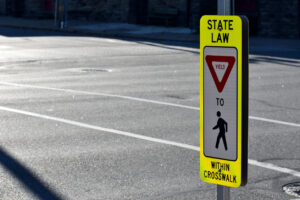
- Drivers are required to stop when a pedestrian is in a crosswalk on the driver’s half of the roadway. (Maryland Transportation Article § 21-502)
- Drivers are prohibited from passing a vehicle that is stopped to let a pedestrian cross.
- Pedestrians may not suddenly leave a curb or place of safety into the path of a vehicle that’s so close that the driver can’t yield.
- Pedestrians crossing outside of a crosswalk must yield to oncoming traffic. (Section § 21-503)
- Pedestrians should limit diagonal crossing when possible.
Defense lawyers lean on these provisions to argue contributory negligence. Maryland case law treats a violation as mere evidence of negligence, not automatic contributory negligence. Many times, the last clear chance doctrine can still carry the case to a successful result.
Types of Pedestrian Cases We Handle in Baltimore
Pedestrian work covers more than the classic "person crossing a street" case.
At WGK Personal Injury Lawyers, we represent clients in pedestrian accident cases involving:
- Crosswalk collisions where the driver failed to yield under § 21-502 or passed a vehicle stopped for a pedestrian. These are the most defensible pedestrian cases when the statute is on your side.
- Mid-block and outside-crosswalk strikes where the defense argues contributory negligence. Last clear chance and Myers v. Bright are the levers.
- Turning-vehicle collisions where a driver making a left or right turn fails to look for the pedestrian who already had the walk signal.
- Sidewalk and parking-lot strikes where a vehicle leaves the roadway, including downtown chain-reaction crashes where one vehicle is knocked into a person standing on the sidewalk. Fault can take time to establish, and when the at-fault driver carries only a minimum policy, the available recovery may be capped well below the cost of a crush injury.
- Hit-and-run pedestrian cases, where the driver flees and the path to recovery runs through your own or a household member’s uninsured-motorist coverage, PIP, or the UCJ Fund.
- Pedestrian strikes by commercial vehicles, including delivery vans, trucks, and rideshare vehicles. Truck cases bring additional layers of evidence (EDR data, dash cams) and additional layers of insurance.
- Bicycle, electric-scooter, and other vulnerable-road-user cases. Our Baltimore bicycle accident lawyers and Baltimore electric scooter accident lawyers are familiar with the legal mechanics that frequently overlap with these types of cases.
- Fatal pedestrian crashes. Wrongful death claims are limited to the spouse, parents, and children of the deceased. We handle these matters together with the survival action filed by the estate.
We also handle the related vehicle-on-vehicle and roadway cases that often share the same facts: car accidents, hit-and-run cases, distracted-driving crashes, and truck collisions.
Common Injuries in Baltimore Pedestrian Crashes

Pedestrians have no airbag, no seatbelt, and no large protective metal shell. The impact moves through the body twice: once when the vehicle strikes, and again when the body strikes the pavement, the windshield, or a fixed object.
The injuries we see most often involve:
- Traumatic brain injury and concussion, including subdural hematomas and post-concussive symptoms that may not appear for days. Even a "minor" head strike can change a client’s ability to work and concentrate.
- Spinal-cord injury and back fractures, ranging from compression fractures to complete cord injury with paralysis. These cases are catastrophic and routinely involve catastrophic injury representation.
- Pelvis and femur fractures, common in mid-speed strikes where the bumper hits at thigh level. Open reduction and internal fixation surgery is the standard repair.
- Lower-leg and ankle fractures, including tibia and fibula fractures that often require surgery and months of weight-bearing restrictions.
- Internal organ injury from blunt force to the torso, including lung contusions, splenic and liver injury, and intra-abdominal bleeding.
- Soft-tissue and joint injury to the shoulder, knee, and wrist, often from instinctive bracing or the secondary impact with the road.
- Psychological injury, including PTSD, driving and crossing anxiety, sleep disturbance, and depression. Pain and suffering damages in Maryland cover physical pain and daily-life limitations, not just the medical chart.
Always seek prompt medical attention after a car-and-pedestrian accident in Baltimore, Maryland. Your visit to the emergency room documents your injuries and helps to establish a causal link between your trauma and the crash. Your medical record will be a critical piece of evidence when you decide to pursue compensation down the line. Delaying care, even by a little bit, can put your health in danger and give the insurance company reason to downplay your injuries or deny your claim.
Who Can Be Held Liable For a Pedestrian Accident in Baltimore
The at-fault driver is the obvious defendant, but pedestrian cases often involve more than one liable party. Your recovery depends on identifying every party whose conduct or coverage may answer for the harm.
In a typical Baltimore pedestrian file, we look at six potential defendants:
- The driver for failing to keep a proper lookout, failing to yield, speeding, running a red light, or driving impaired. The driver’s auto liability policy is the first recovery target.
- The driver’s employer when the driver was on the clock. A driver delivering for a commercial fleet, working as a rideshare driver, or driving a company vehicle creates a vicarious liability claim against the employer under its own policy.
- Rideshare and gig platforms, depending on the driver’s status. Uber and Lyft provide coverage when the driver is en route to a passenger or has a passenger on board, not when merely clocked into the app. Empower does not provide insurance coverage to its drivers, so recovery requires going after the driver personally.10
- A government agency or municipality when the vehicle is a city, county, or state vehicle. These claims are subject to statutory damage limits and special procedural rules under the Local Government Tort Claims Act.11 Federal vehicles trigger the Federal Tort Claims Act, which imposes a 6-month mandatory waiting period before suit can be filed.
- A property owner or contractor when sidewalk obstructions, missing crossings, or improperly maintained traffic control devices contribute to the pedestrian accident. These are roadway-design or premises questions that piggyback on the underlying liability case.
- A vehicle manufacturer when a defect (e.g., brake failure, accelerator malfunction) contributed to the pedestrian crash. These are rare but real, and they bring product liability insurance into the mix.
Each defendant on that list carries its own coverage. That is why a pedestrian case turns on identifying every layer of insurance early in the file. The first $30,000 minimum policy is rarely the only money on the table. The difference between a single-policy recovery and a stacked-defendant recovery is often the difference between covering the ER bill and covering the lifetime cost of your injury.
Damages Available to Injured Pedestrians in Baltimore
Maryland law allows two types of damages in a pedestrian case: compensatory and punitive.
Compensatory Damages
Compensatory damages are further divided into two categories: economic and non-economic.
Economic damages are out-of-pocket losses with documentation, such as:
- Medical bills (emergency room, surgery, hospitalization, rehabilitation, follow-up care, future medical care)
- Lost wages and lost earning capacity
- Costs of replacement services made necessary by the injury
Economic damages have no statutory limit. Maryland does not limit what you can recover for documented medical expenses and lost income.
Note: property damage is a separate claim from your bodily injury claim. Property damage shows force and impact (the mechanism of injury), but the property damage dollar amount does not transfer into the bodily injury recovery.13
Non-economic damages cover the human side of the injury. These are awarded to acknowledge harder-to-value struggles and life changes that can happen when you’re hit by a car.
Examples include:
- Physical pain
- Mental anguish, depression, PTSD, driving anxiety
- Loss of enjoyment of life and daily-life limitations (not being able to lift a child, walk a familiar route, or sleep through the night)
- Disfigurement and scarring
- Loss of consortium for the spouse
Maryland caps pain and suffering damages in pedestrian injury cases. For causes of action arising on or after October 1, 2025, Maryland’s non-economic damages cap is $965,000 per injured person, rising to $1,447,500 in wrongful death cases with two or more beneficiaries.
The cap that governs is based on the date of the accident, not the date the lawsuit is filed.12 The cap increases by $15,000 every year on October 1st. Juries are not told about the cap at trial.
Punitive Damages
In Maryland, punitive damages require a showing of actual malice (an intent to injure or an evil motive). That standard is extremely high and is almost never met in a routine pedestrian crash. We do not promise punitive damages in a typical case.
Maryland Law for Pedestrian Cases
Three statewide rules drive every Maryland pedestrian accident case.
Contributory Negligence and Last Clear Chance
Maryland, along with the District of Columbia and Virginia, is one of only a handful of jurisdictions that still follow a pure contributory negligence rule. Even one percent of fault can bar your recovery.
However, your negligence must have actually contributed to your pedestrian accident. Mere evidence of negligence (crossing outside a crosswalk, dark clothing) is not the same thing as contributory negligence.4
Even if you were negligent, you may still recover compensation for pedestrian accident injuries if the other party had the last clear chance to avoid the accident. The doctrine asks whether the driver had the last clear chance to avoid the crash and failed to use it. It tends to apply where the client had already made it well across the road, or where the driver was trying to beat a signal and had time to stop.
Do not write off your case because someone told you Maryland contributory negligence makes pedestrian cases unwinnable. It does not. It just makes it all the more important to get an experienced pedestrian accident attorney in your corner as soon as possible.
Statute of Limitations and Government Notice
Maryland’s general statute of limitations for personal injury is 3 years from the date of the accident.14 This gives you three years from the date you were injured as a pedestrian in Baltimore to formally request compensation from the at-fault party or their insurance carrier.
Claims against a city, county, or state agency carry a much shorter notice deadline: one year for both local governments and the State of Maryland. Federal Tort Claims Act claims require a 6-month waiting period after notice before suit can be filed.11
Court Venue and Jury Tendencies
In Maryland, a pedestrian accident lawsuit can be filed where the accident occurred or where the defendant resides.15 You do not get to pick freely.
Most Baltimore pedestrian cases land in Baltimore City Circuit Court, which mandates mediation. Among Maryland jurisdictions, Baltimore City Circuit Court and Prince George’s County Circuit Court tend to produce more plaintiff-favorable verdicts than Baltimore County or Anne Arundel County, both of which are more conservative for personal injury cases.16
Mary Finke, one of our trial attorneys, has noted that conservative jurisdictions are not a reason to avoid filing, because even in a defendant-friendly venue, a longtime local plaintiff can overcome historic tendencies.
How Insurance Works After a Pedestrian Accident
Since a pedestrian is on foot during an accident, the insurance claims process can be more complicated than in a vehicle-on-vehicle collision case. For pedestrians, recovery runs through a layered insurance stack that must be handled in a specific order.
Layer One: The At-Fault Driver’s Liability Policy
Maryland’s minimum required auto bodily injury policy is $30,000 per person and $60,000 per accident.17 Many drivers carry only that minimum. In a catastrophic pedestrian case, a $30,000 ceiling rarely covers the medical bills, let alone lost wages and pain and suffering. That is the most common reason a serious pedestrian recovery falls short, and it is why we look for every additional layer of coverage before accepting that the minimum policy is all that is available.
Layer Two: PIP (Personal Injury Protection)
Maryland PIP is a no-fault first-party benefit, typically up to $2,500 for medical bills and lost-wage reimbursement, payable regardless of who was at fault.18 An injured pedestrian can often access PIP through their own household auto policy. Maryland PIP and Med-Pay are not subject to subrogation, so you keep that benefit on top of any liability recovery. PIP is not required in Maryland, but it is widely available.
Layer Three: UM/UIM and Enhanced UIM
Maryland requires uninsured/underinsured motorist (UM/UIM) coverage on auto policies under Md. Code, Ins. § 19-509.19 A pedestrian struck by an uninsured or underinsured driver can often recover under their own or a resident household member’s UM/UIM coverage.
There are two important mechanics to consider. First, the at-fault driver’s policy must be exhausted (limits tendered) before standard UIM applies. Next, standard UIM is reduced by an offset for the at-fault driver’s policy. Enhanced UIM (EUIM) stacks on top of the at-fault driver’s policy with no offset. EUIM costs an extra premium and is the single best coverage choice we recommend.20
Layer Four: The UCJ Fund
Maryland’s Unsatisfied Claim and Judgment Fund (UCJ), administered through Maryland Auto Insurance’s Uninsured Division, can pay up to $30,000 per person and $60,000 per accident for a pedestrian injured by an uninsured or hit-and-run driver when no household auto policy is available.21 The UCJ does not cover the uninsured driver themselves. $30,000 is the cap, not a minimum.
Why This Order Matters
The layers are not interchangeable. PIP pays first, regardless of fault. The liability policy is the primary fault-based source. UM/UIM and the UCJ Fund fill the gap when the at-fault driver is uninsured, underinsured, or unidentified. Get the order wrong, or miss a layer, and you leave money on the table that should have gone to your recovery.
Our pedestrian accident attorneys have extensive experience navigating this intricate process, and we know what steps have to be taken, and when, to help our clients pursue the strongest available outcome. Call our downtown Baltimore law office to learn more today. Your first consultation is free.
Recent Pedestrian Accident Results
WGK Personal Injury Lawyers has recovered over $100 million for our clients and won numerous six- and seven-figure settlements for injured Marylanders.1 Pedestrian recoveries sit inside the firm’s broader auto-injury caseload and cannot be isolated as their own line item, because what a pedestrian case is worth tracks the severity of your injury, the strength of the liability evidence, and the layers of insurance available, not a category average. Your recovery depends on your medical picture, your lost income, and how hard we can push the contributory-negligence fight in your favor.
Past results do not guarantee future outcomes. Every case is different. These figures represent aggregated data from cases handled by our firm and are provided for informational purposes only.
Frequently Asked Questions
How much does a Baltimore pedestrian accident lawyer cost?
Nothing up front. Nothing out of your own pocket. Our law firm represents injured pedestrians on a contingency fee basis. Our fees are directly tied to the results we achieve. Our fee is 33.3% of your gross recovery before a lawsuit is filed. If we file a lawsuit, the fee increases to 40% of your gross award. The fee bumps at filing, not at trial.
We advance standard case expenses such as medical record copies, police report fees, and investigator costs. Those are reimbursed from your financial recovery, too.
If we don’t win your pedestrian accident case, you owe nothing.
How long does a Maryland pedestrian accident case take?
It depends on the extent of your injuries, the strength of the evidence backing your case, and disputes over liability.
Pre-suit settlement for soft-tissue pedestrian injuries usually runs 4 to 7 months. Cases involving surgery, broken bones, or extended treatment typically run 10 to 12 months or longer before settlement. If we file suit in Baltimore City Circuit Court, add 12 to 24 months because of the court’s timeline.22
Ultimately, your case timing depends on how long your treatment runs and how the defense behaves.
I was crossing outside the crosswalk. Can I still recover?
Often, yes. The defense will argue contributory negligence under § 21-503. Our counter is Myers v. Bright: a statutory violation is mere evidence of negligence, not automatic contributory negligence. If you had crossed more than halfway when the driver struck you, the last clear chance doctrine may also apply. Both doctrines can carry a pedestrian case even when you are outside the crosswalk. The answer is highly fact-specific, so call our pedestrian accident attorneys in Baltimore before you assume your case is dead.
The driver had no insurance or fled the scene. Can I still recover?
Many times, yes. A hit-and-run pedestrian is not without options even when the at-fault driver is unreachable or unknown. Compensation can often be recovered through a household Personal Injury Protection (PIP) policy and/or UM benefits. In other cases, the Maryland UCJ Fund can be a source of compensation for injured pedestrians in Baltimore.
I do not own a car. How do I recover anything?
There are typically two paths for recovering compensation if you’re hit by a car and don’t have a vehicle of your own.
If you live in a household with anyone who has a Maryland auto policy, that policy’s PIP and UM/UIM coverage often extend to you as a resident pedestrian.
If no household policy is available, the UCJ Fund can pay up to $30,000 per person for an uninsured or hit-and-run pedestrian.
My child was hurt as a pedestrian. Is the process different?
Some things are different for minors. The statute of limitations can be tolled until age 18, though a parent or guardian has the right to bring a claim on a child’s behalf before that. Under Maryland law, a child’s settlement requires court approval. Liability, insurance, and the contributory negligence rule work the same way.
Do I have to come into your Baltimore office for help after a pedestrian accident?
No. Most cases can be handled by phone. We sign documents remotely, send updates by phone or email, and mail the settlement payment when the case resolves. You are welcome at our office at 14 W. Madison Street in Baltimore, but you are not required to come in. After a serious pedestrian injury, treatment and recovery are the priority, and we work around that.
How can Maryland’s cap on non-economic damages affect my settlement?
Maryland caps non-economic damages in all personal injury cases. This can be particularly problematic for pedestrians. Pedestrian injuries are disproportionately catastrophic, which means the cap is more likely to limit your recovery than in a typical fender-bender. We work to convert as much of the harm into economic damages as possible (replacement-care costs, future medical, lost earning capacity), because economic damages have no statutory limit. In these situations, there’s real value in having an experienced and knowledgeable pedestrian accident attorney from our law firm in your corner.
Schedule a Free Consultation With a Maryland Pedestrian Accident Lawyer
WGK Personal Injury Lawyers has spent nearly 50 years representing injured Marylanders. We’re members of the community and have dedicated our careers to fighting for our neighbors’ best interests in the wake of devastating accidents. Now, we’re here to help you take on a powerful insurance company in the wake of your serious pedestrian accident, too.
Backed by nearly 100 years of combined attorney experience, we’ve helped clients recover over $100 million in damages. Those case results include numerous six- and seven-figure settlements for Maryland families.1
Past results do not guarantee future outcomes. Every case is different. These figures represent aggregated data from cases handled by our firm and are provided for informational purposes only.
Call (410) 837-2144 for a Free Baltimore Pedestrian Case Review. We answer 24 hours a day. You pay nothing unless we recover for you.
Related Practice Areas and Service Areas
- Baltimore Personal Injury Lawyer – statewide Maryland PI hub
- Baltimore Car Accident Lawyer – drivers, passengers, and adjacent auto fact patterns
- Baltimore Bicycle Accident Lawyer – vulnerable road users
- Baltimore Electric Scooter Accident Lawyer – scooter and micromobility injuries
- Baltimore Hit and Run Accident Lawyer – when the driver flees
- Baltimore Distracted Driving Accident Lawyer – drivers on phones
- Baltimore Truck Accident Lawyer – commercial vehicle strikes
- Baltimore Catastrophic Injury Lawyer – severe and life-altering injury cases
- Baltimore Wrongful Death Lawyer – fatal pedestrian crashes
- Maryland Personal Injury Lawyer – statewide service area
Sources
- WGK Personal Injury Lawyers first-party firm data, 2026.
- The Baltimore Banner, “Baltimore crash and High Injury Network analysis,” 2024. https://www.thebanner.com/community/transportation/baltimore-crash-accidents-car-pedestrians-roads-W6C72ZN4ZJDWXNFXSD56CP7XXU/
- WGK Personal Injury Lawyers attorney interview, 2026; Maryland common law as reinforced by Coleman v. Soccer Association of Columbia, 432 Md. 679 (2013). General statute of limitations and venue rules: https://mgaleg.maryland.gov/mgawebsite/laws/StatuteText?article=gcj§ion=5-101
- WGK Personal Injury Lawyers attorney interview, 2026.
- WGK Personal Injury Lawyers attorney interview, 2026.
- WGK Personal Injury Lawyers attorney interview, 2026.
- Md. Code, Cts. & Jud. Proc. § 5-101 (general 3-year statute of limitations) and the Local Government Tort Claims Act / Maryland Tort Claims Act notice provisions (one-year notice). https://mgaleg.maryland.gov/mgawebsite/laws/StatuteText?article=gcj§ion=5-101
- Insurance Institute for Highway Safety (IIHS), Fatality Facts 2023: Pedestrians; Governors Highway Safety Association (GHSA), Pedestrian Traffic Fatalities by State: 2024 Preliminary Data. https://www.iihs.org/topics/fatality-statistics/detail/pedestrians and https://www.ghsa.org/resource-hub/pedestrian-traffic-fatalities-2024-data
- Zero Deaths Maryland (Maryland Department of Transportation Vision Zero program). https://zerodeathsmd.gov/resources/crashdata/
- WGK Personal Injury Lawyers attorney interview, 2026.
- WGK Personal Injury Lawyers attorney interview, 2026.
- Md. Code, Cts. & Jud. Proc. § 11-108 (non-economic damages cap). Cap rises by $15,000 each October 1 and is set by the date of the accident, not the filing date. https://mgaleg.maryland.gov/mgawebsite/laws/StatuteText?article=gcj§ion=11-108
- WGK Personal Injury Lawyers attorney interview, 2026.
- Md. Code, Cts. & Jud. Proc. § 5-101 (general 3-year statute of limitations). https://mgaleg.maryland.gov/mgawebsite/laws/StatuteText?article=gcj§ion=5-101
- WGK Personal Injury Lawyers attorney interview, 2026.
- WGK Personal Injury Lawyers attorney interview, 2026.
- WGK Personal Injury Lawyers attorney interview, 2026.
- WGK Personal Injury Lawyers first-party firm data, 2026.
- Md. Code, Insurance § 19-509 (mandatory UM/UIM coverage). https://mgaleg.maryland.gov/mgawebsite/laws/StatuteText?article=gin§ion=19-509&enactments=false
- WGK Personal Injury Lawyers attorney interview, 2026.
- WGK Personal Injury Lawyers attorney interview, 2026 and Maryland Auto Insurance Uninsured Division case study. https://www.mymarylandauto.com/site/blog/case-study-the-uninsured-division-helps-hit-and-run-victim/
- WGK Personal Injury Lawyers attorney interview, 2026.